
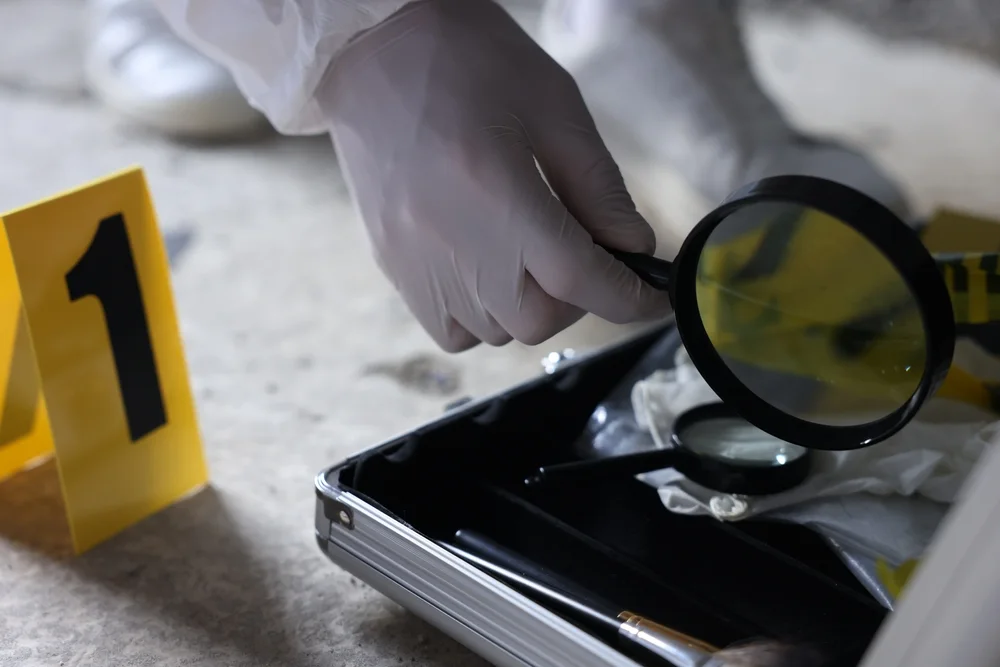
California does not have a single statewide education or licensing route for medicolegal death investigators. Counties hire under several titles, including deputy coroner, coroner investigator, medical examiner investigator, medical examiner-coroner investigator, and deputy sheriff-coroner investigator. Qualifications range from a high school diploma followed by employer training to an associate or bachelor’s degree, healthcare credentials, investigative experience, mortuary work, or prior service as a sworn deputy.
The practical route is to identify the type of county position you want, complete education and experience that match that classification, pass the county’s hiring process, finish required agency or California POST training, and pursue professional certification after entering qualifying employment. A degree can improve access to multiple county systems, but California does not require every death investigator to hold a bachelor’s degree or graduate from a program titled forensic science.
This career also differs from general crime scene investigation. Medicolegal death investigators focus on deaths that fall under coroner or medical examiner jurisdiction. Their work includes examining and documenting scenes and bodies, gathering medical and social history, identifying decedents, interviewing witnesses and clinicians, notifying families, preserving evidence, and writing reports used by pathologists, law enforcement, attorneys, courts, and public agencies.
The California pathway at a glance
A realistic plan usually follows these stages:
- Search California county classifications under several job titles. Include deputy coroner, medical examiner investigator, coroner investigator, forensic investigator, and sheriff-coroner investigator.
- Choose an education route that preserves access to more than one employer. Relevant coursework can include anatomy, physiology, biology, chemistry, medical terminology, criminal investigation, evidence, report writing, forensic science, and mortuary science.
- Develop practical experience. Healthcare, emergency medicine, law enforcement, crime scene processing, investigations, morgue work, autopsy assistance, embalming, medical records, and coroner internships can all be relevant.
- Apply through a county civil-service or public-safety hiring process. Depending on the legal status of the job, screening can include a written examination, interviews, fingerprinting, a background investigation, medical testing, and psychological evaluation.
- Complete employer and POST training. Some counties allow newly hired investigators to complete PC 832 and the 80-hour POST Coroners’ Death Investigation Course during probation.
- Pursue ABMDI certification after accumulating qualifying employment experience. The American Board of Medicolegal Death Investigators generally does not provide a pre-employment certification that a college student can obtain without working in an eligible jurisdiction.
The first decision is whether to target a direct-entry medical examiner or deputy coroner position, a position requiring prior medical or investigative work, or a sheriff-coroner assignment available only after service as a sworn deputy.
What a medicolegal death investigator does
California coroners are responsible for inquiring into specified reportable deaths. These include violent, accidental, suicidal, suspected homicidal, unattended, sudden, unusual, poisoning, drowning, fire, gunshot, stabbing, and custodial deaths, along with other categories established by law. Death investigators therefore handle far more than suspected homicides.
According to the National Institute of Justice’s 2024 death-scene investigation guide, the work progresses through initial notification, scene arrival, documentation and evaluation, examination of the body, collection of decedent-profile information, and completion of the scene investigation. Investigators work independently at many points, but they coordinate with forensic pathologists, law enforcement officers, emergency personnel, clinicians, funeral homes, laboratories, and families.
Typical responsibilities include:
- Reviewing the initial death report and determining whether the office has jurisdiction
- Responding to homes, hospitals, roadways, outdoor locations, businesses, custody facilities, and other scenes
- Photographing the scene and the decedent
- Documenting body position, condition, injuries, personal effects, medications, and environmental evidence
- Interviewing relatives, witnesses, law enforcement officers, healthcare providers, and other relevant parties
- Reviewing medical records and obtaining medical, social, and behavioral history
- Assisting with identification through documents, fingerprints, dental information, medical information, or other methods
- Collecting, preserving, labeling, and transferring evidence or specimens
- Maintaining chain of custody
- Notifying next of kin or supporting the notification process
- Preparing investigative reports
- Coordinating release of remains and personal property
- Providing testimony in court or administrative proceedings
- Assisting during mass-fatality or other critical incidents
Some classifications also include transporting bodies, assisting with autopsies, fingerprinting decedents, working in a morgue, and managing property.
Investigator versus forensic pathologist
A medicolegal death investigator is not a forensic pathologist. A forensic pathologist is a physician with specialized pathology training who performs or supervises autopsies and makes medical interpretations concerning cause of death. The investigator develops the factual record surrounding the death, documents the scene and body, gathers history, and supplies information needed for the medical and legal determination.
County duty statements sometimes use broad language about determining cause or manner. In practice, the investigator’s findings support the coroner or medical examiner system, while medical conclusions and final statutory authority rest with the appropriate physician or official under that jurisdiction’s structure.
Death investigation versus general CSI work
A crime scene investigator may process burglaries, assaults, shootings, vehicle scenes, property crimes, and other incidents whether or not a death occurred. A medicolegal death investigator concentrates on deaths accepted by a coroner or medical examiner office.
The occupations overlap in photography, documentation, evidence preservation, fingerprints, chain of custody, and testimony. Death investigation adds extensive work with bodies, medical records, identification, family history, clinicians, funeral homes, and next-of-kin communication. A conventional CSI curriculum can be useful, but it may leave gaps in anatomy, physiology, pathology terminology, and the medical circumstances surrounding death.
California employers use several hiring models
No single county example represents the entire state. California systems include independent coroner offices, medical examiner offices, sheriff-coroner departments, and classifications that blend civilian and peace-officer functions.
Direct-entry positions with college coursework
Some counties recruit candidates who have not previously worked as death investigators, provided they meet education requirements.
A 2026 San Diego County Medical Examiner Investigator I recruitment accepted an associate degree or 60 semester units, with at least 15 semester units in relevant coursework such as anatomy, biology, chemistry, forensics, investigations, medical terminology, or physiology. The county also accepted specified coroner, medical examiner, peace-officer, and medical experience routes.
Sacramento County’s 2026 Deputy Coroner recruitment required 60 semester or 90 quarter units. At least nine semester or 13 quarter units had to be in criminal justice, life science, health science, or a closely related subject. A related bachelor’s degree was desirable but not mandatory.
These models support a community-college entry strategy, but only when the transcript contains the required subjects. Sixty units of unrelated general education would not satisfy a posting that specifies health science, life science, criminal justice, or medical coursework.
Entry routes based on a bachelor’s degree
A bachelor’s degree can qualify an applicant where an employer accepts education in place of prior investigative experience.
Los Angeles County’s Medical Examiner Investigator Trainee classification recognizes a relevant bachelor’s degree in fields such as administration of justice, health or physical science, or nursing. Fresno County’s 2026 Deputy Coroner I recruitment included a bachelor’s route in biological science, physical science, criminology, or a closely related field.
A four-year degree is not a statewide mandate, but it offers greater portability between counties. It is especially useful when a posting allows either a relevant degree or several years of specialized experience that a new applicant has not yet accumulated.
Healthcare and emergency-medicine routes
Clinical and emergency experience appears repeatedly in California county qualifications. Los Angeles County accepts specified paramedic, nursing, and physician-assistant routes. San Bernardino County has recognized clinical work as a paramedic or nurse. Fresno has accepted combinations of college credit and experience in nursing, emergency medicine, medical technology, or laboratory assistance.
Healthcare experience can provide preparation in medical terminology, anatomy, physiology, chart review, communication with clinicians, biological hazards, and interactions with distressed families. It does not necessarily provide scene photography, evidence handling, criminal investigation, or formal investigative report writing. Applicants coming from healthcare can strengthen their preparation with coursework in investigations, forensic photography, criminal procedure, evidence, and technical writing.
Mortuary, morgue, autopsy, and embalming routes
California counties also recognize work involving deceased persons. San Bernardino County’s qualification routes have included autopsy-assistant work, licensed embalming, lower-level death investigations, and a structured county coroner volunteer pathway. Fresno has accepted qualifying experience as a pathology assistant or morgue attendant when combined with the required education route. Santa Clara County has looked for experience working with deceased persons in a medical, nursing, investigative, coroner, or medical examiner setting.
Mortuary and morgue experience demonstrates comfort with human remains, infection-control procedures, body handling, identification, documentation, and communication with funeral-service professionals. A mortuary science education can be directly relevant, especially when paired with investigative writing and scene-processing skills.
Investigative and law-enforcement routes
Field investigation, crime scene work, and law enforcement experience can substitute for a specific degree in some classifications. Los Angeles County provides a route based on two years of field investigative experience. San Bernardino County has accepted medical examiner or law enforcement investigation and law enforcement crime scene processing.
This pathway is strongest when the experience includes interviews, evidence handling, photography, detailed reports, court testimony, and independent field decisions. General security work without investigative duties is less closely aligned with the published responsibilities.
Internal sworn assignments
Some sheriff-coroner systems do not recruit the public directly into death investigation. Monterey County treats Deputy Sheriff-Coroner Investigator as a special assignment for an existing Deputy Sheriff-Operations employee. The assignment requires at least two years as a Monterey County deputy and is made at the sheriff’s discretion. The underlying deputy classification requires graduation from a California POST-approved academy or a valid California Basic POST Certificate.
Becoming a patrol deputy first is therefore a valid pathway in Monterey County, but it is not a statewide rule. Other counties recruit deputy coroners or medical examiner investigators directly from outside the agency.
Staged peace-officer authority
Peace-officer status is not always a simple civilian-versus-sworn division at initial appointment. Shasta County’s Deputy Coroner Investigator specification states that investigators are initially unarmed and cannot exercise specified peace-officer powers until they complete the PC 832 Arrest and Firearms Course and the 80-hour POST death-investigation course.
Sacramento and Riverside also provide examples of required training being completed after appointment. A candidate may be hired into an entry level, undergo probationary training, and receive additional authority or advance after meeting the county’s training requirements.
Comparing recent California entry requirements
The following examples show how much county standards can differ. They describe named classifications and recruitment periods, not permanent statewide requirements.
| County and classification | Published qualification pattern |
|---|---|
| Riverside County, Deputy Coroner I | High school diploma or equivalent, no prior experience listed for Level I, plus ability to complete required POST-related training and meet applicable peace-officer standards |
| Sacramento County, Deputy Coroner I/II | 60 semester or 90 quarter units, including specified criminal justice, life science, health science, or related coursework |
| San Diego County, Medical Examiner Investigator I | Relevant experience or an associate degree or 60 semester units with at least 15 units in specified medical, science, forensic, or investigative subjects |
| Fresno County, Deputy Coroner I | Relevant bachelor’s degree, or specified combinations of college education and nursing, emergency medicine, laboratory, investigative, pathology, or morgue experience |
| Los Angeles County, Medical Examiner Investigator Trainee | Routes based on field investigation, a relevant bachelor’s degree, an administration-of-justice associate degree plus experience, or specified clinical credentials and experience |
| San Bernardino County, Deputy Coroner Investigator | Multiple practical routes involving death investigation, law enforcement investigation, crime scene work, autopsy assistance, embalming, clinical work, or a county volunteer pathway |
| Santa Clara County, Medical Examiner-Coroner Investigator | Associate-equivalent education, preferably in a related discipline, plus experience with deceased persons in a medical, nursing, investigative, coroner, or medical examiner setting |
| Monterey County, Deputy Sheriff-Coroner Investigator | Internal assignment requiring prior service as a Monterey County Deputy Sheriff-Operations employee |
Riverside illustrates that a bachelor’s degree is not universal. Monterey illustrates the opposite issue: education alone cannot provide direct entry when death investigation is an internal assignment. Sacramento and San Diego show how a carefully planned associate-level education can satisfy an entry requirement. Fresno, Los Angeles, and San Bernardino give substantial weight to professional experience outside a coroner office.
Choosing an education route
No single major is ideal for every California county. A practical curriculum should cover both the medical and investigative sides of the occupation.
Science-heavy route
Biology, forensic science, health science, and physical science degrees can provide a foundation in human biology, scientific reasoning, laboratory practice, and evidence. Useful courses include:
- Human anatomy and physiology
- General biology
- General chemistry
- Microbiology
- Genetics
- Pathophysiology
- Statistics
- Medical terminology
- Forensic biology
- Toxicology, when available
This route aligns with county postings that name biological, physical, health, or forensic science. Its common weakness is limited training in interviewing, criminal procedure, scene photography, and narrative investigative reports.
A biology major preparing for death investigation does not need to become a laboratory criminalist, but coursework should remain applied. Anatomy, physiology, medical terminology, and technical writing often have more direct relevance to field death investigation than an entirely theoretical science schedule.
Criminal justice or investigations route
Criminal justice and administration-of-justice programs can address:
- Criminal investigation
- Rules of evidence
- Crime scene processing
- Interviewing
- Criminal law and procedure
- Forensic photography
- Report writing
- Courtroom testimony
- Ethics
- Chain of custody
These subjects support the field-investigation side of the occupation and appear in several county education routes. A curriculum light in science can leave an applicant underprepared for medical records, disease processes, injuries, medications, and communication with forensic pathologists. Adding anatomy, physiology, biology, chemistry, and medical terminology creates a better balance.
Healthcare route
Nursing, paramedicine, emergency medical services, physician-assistant work, and related health fields can lead into death investigation through experience-based qualifications. The advantages include familiarity with clinical records, disease, trauma, medication, medical terminology, infection control, and patient or family communication.
Investigative procedure remains the main gap. Coursework or training in photography, evidence collection, interviewing, criminal law, and structured report writing can make the transition more direct.
Mortuary science route
Mortuary science addresses human remains, restorative and embalming practices, funeral service law, anatomy, pathology, sanitation, and family communication. California county classifications sometimes recognize embalming, morgue, autopsy, or mortuary experience.
This route works better when paired with field-investigation preparation. Scene safety, photography, evidence recognition, witness interviews, chain of custody, and courtroom testimony are separate competencies from funeral-service practice.
Associate degree versus bachelor’s degree
An associate degree can meet the education threshold for some California positions, especially when the transcript includes required science, health, forensic, or investigative coursework. San Diego, Sacramento, and Santa Clara provide concrete examples of associate-level or 60-unit pathways.
A bachelor’s degree broadens eligibility where counties accept a four-year degree in place of prior experience. It can also support later promotion, administrative responsibilities, graduate study, or movement into related forensic roles. The strongest bachelor’s plan combines medical science with field investigation and writing rather than relying on the degree title alone.
Someone beginning at a community college can complete anatomy, physiology, biology, chemistry, medical terminology, criminal investigation, evidence, photography, and composition before transferring. California transfer planning should preserve both degree progress and the exact course categories used in county job specifications.
Readers comparing education with related public-safety fields can also review the broader California forensic and investigative career guides.
Building relevant experience before applying
County employers often accept experience because the work demands mature judgment under difficult conditions. Relevant experience can come from several settings.
Coroner internships and volunteer service
A coroner internship can expose a student to jurisdiction screening, records, evidence procedures, autopsies, scene response, and interactions with families and professional partners. Orange County has operated an unpaid internship for advanced college students and graduates in fields including forensic science, biology, chemistry, anthropology, criminal justice, and mortuary science. The internship did not guarantee county employment.
Sacramento County currently identifies the Coroner’s Office as a department that may host student interns through its county internship program. Availability, pay status, duration, and assignment type vary.
Structured volunteer experience can carry unusual value when a county explicitly recognizes its own program. San Bernardino County has included a county coroner volunteer pathway among its qualifying routes. General volunteer service, by contrast, counts only when it matches the wording of the classification.
Medical and emergency experience
Emergency departments, ambulance services, nursing units, medical records departments, and clinical support roles can build familiarity with trauma, disease, chart documentation, privacy, infection control, and communication during crises. Paramedic and nursing backgrounds have been specifically recognized in multiple county qualification schemes.
Morgue and autopsy experience
Morgue attendants, pathology assistants, autopsy assistants, embalmers, and mortuary personnel can develop experience with remains, identification, personal property, sanitation, and postmortem procedures. Some counties explicitly list these backgrounds, making them more than loosely related experience.
Investigations and crime scene processing
Work that includes interviews, evidence, photographs, reports, and testimony is directly transferable. The quality of the duties matters more than a broad job label. A position involving independent fact development and formal case reports provides better preparation than one limited to observation or access control.
Report writing
Report writing deserves deliberate preparation. An investigator must turn observations, interviews, medical information, photographs, timelines, and evidence into a clear factual account. The report may guide an autopsy, support law enforcement, answer questions from attorneys, or be reviewed years later in court.
Useful preparation includes technical writing, investigative report writing, grammar, chronology, note-taking, and separating observation from inference. Strong science knowledge cannot compensate for a report that is incomplete, disorganized, or ambiguous.
Applying and completing the selection process
County applications are usually screened against the exact education and experience language in the announcement. Transcripts, licenses, certificates, and detailed employment descriptions can determine whether an applicant advances.
A typical selection process may include:
- Application and supplemental questionnaire review
- Written or online examination
- Structured interview
- Background investigation
- Fingerprinting
- Medical evaluation
- Psychological evaluation
- Driving-record review
- Reference and employment checks
- Probationary training
Peace-officer-linked classifications can impose California statutory and POST selection standards. These can include authorization to work, minimum age rules for specified positions, fingerprinting, a detailed background investigation, and physical and psychological suitability.
Not every California medicolegal death investigator is a sworn or armed peace officer. Santa Clara’s medical examiner-coroner model, Riverside’s deputy coroner model, Shasta’s staged authority, and Monterey’s internal deputy assignment illustrate materially different structures. The current announcement establishes whether POST selection standards, PC 832, firearms components, or academy experience apply.
California POST coroner training
The California Commission on Peace Officer Standards and Training specifies a minimum of 80 hours for the Coroners’ Death Investigation Course. Forty hours are allocated to death investigation. Other areas include:
- Forensic pathology
- Laboratory practices
- Medical records
- Anthropology
- Odontology
- Disaster management
- Coroner law
- Vehicle fatalities
- Communicable diseases
- Bereavement
The course partially fulfills basic-training requirements for peace-officer members of coroner offices. Several counties require it within the first year or by the end of probation rather than before application. PC 832 timing also varies by employer and level.
A future education rule for some peace-officer positions
California Government Code Section 1031.5 establishes an education or professional-certificate requirement beginning January 1, 2031, subject to statutory timelines and exemptions. It applies to specified peace officers and other peace officers employed by agencies participating in POST. Qualifying routes include certain associate, bachelor’s, advanced, or modern-policing degrees and a professional policing certificate.
The rule is not a future bachelor’s mandate for every death investigator. Its relevance depends on the position’s peace-officer status, the agency’s POST participation, appointment timing, statutory category, and any applicable exemption. Applicants planning for sworn sheriff-coroner careers after 2030 can reduce future constraints by completing at least an associate degree or another qualifying route recognized by the statute.
ABMDI certification comes after entry into the field
The American Board of Medicolegal Death Investigators is a national professional certification organization, not a California occupational licensing agency. ABMDI certification is voluntary nationally, although individual employers can prefer it. Santa Clara County, for example, has expressed a strong preference for Diplomate or Board-certified applicants.
ABMDI Registry certification has Associate and Diplomate tracks. Under the current point-based system, applicants must:
- Be at least 18
- Hold a high school diploma or equivalent
- Currently work for a medical examiner, coroner, or equivalent federal authority
- Perform qualifying death-investigation responsibilities
- Accumulate 640 qualifying points within five years
- Earn at least 384 points through employment experience
Education and approved training can contribute points, but a college degree alone does not create Registry eligibility. The Diplomate track includes a qualifying scene-investigation component, including at least 100 scene points under the current system. The Associate track addresses qualifying death-investigation work without the Diplomate scene threshold.
Advanced Board Certification requires current Registry Diplomate status in good standing for at least six months, an associate degree or higher, qualifying employment, and 4,000 hours of death-investigation experience during the preceding six years. Successful candidates receive Fellow of the ABMDI status.
Certification operates on a five-year cycle. Recertification requires 45 hours of approved continuing education and evidence of continued competency through qualifying employment or the applicable assessment process.
The useful sequence is employment first, Registry eligibility second, and advanced certification after substantial independent experience. Older descriptions of ABMDI eligibility may refer to a simple hourly threshold that no longer reflects the current point system.
Working conditions and career fit
Death investigation combines field response, medical information, legal documentation, public contact, and exposure to human remains. The physical and emotional demands are not secondary features of the job.
County postings describe:
- Nights, weekends, holidays, and rotating shifts
- On-call, standby, and callback assignments
- Unpredictable scene duration
- Rough terrain and outdoor exposure
- Lifting, moving, or assisting with transport of bodies
- Decomposed, burned, dismembered, or otherwise traumatic remains
- Blood, bodily fluids, communicable disease, chemicals, and odors
- Deaths involving infants and children
- Encounters with grieving, angry, or distressed relatives
- Time-sensitive reports and evidence procedures
- Testimony subject to legal scrutiny
San Diego County’s 2026 entry recruitment referred to difficult scenes, rough-terrain access, 50-pound lifting, next-of-kin notifications, and shift or callback work. Sacramento County described nights, weekends, holidays, body handling, difficult scenes, and family notification.
Emotional resilience cannot mean detachment from families or careless exposure to trauma. Effective investigators communicate respectfully while preserving factual accuracy and professional boundaries. Agencies may also expect investigators to use critical-incident support and stress-management resources.
A realistic self-assessment should address four questions:
- Can you work calmly around traumatic death and decomposition?
- Can you communicate with grieving families without making unsupported statements?
- Can you write detailed, neutral reports after a long or disturbing scene?
- Can you maintain evidence and documentation standards during irregular shifts and physical fatigue?
An interest in forensic television or homicide cases is not sufficient preparation. Much of the work involves natural deaths, medical history, records, identification, routine documentation, property, and communication with relatives.
California salary examples
California does not publish a single statewide pay scale for medicolegal death investigators. Compensation varies by county, classification level, bargaining agreement, locality, shift assignment, and experience.
Recent recruitment examples include:
| Employer | Classification and recruitment period | Advertised annual range |
|---|---|---|
| Fresno County | Deputy Coroner I, August 2026 | $60,190 to $73,190 |
| Riverside County | Deputy Coroner I | Approximately $66,154 to $95,740 |
| San Bernardino County | Deputy Coroner Investigator, July 2026 | Approximately $73,258 to $103,210 |
| Sacramento County | Deputy Coroner Levels I and II, 2026 | Approximately $74,792 to $104,755 |
| Santa Clara County | Medical Examiner-Coroner Investigator, 2025 to 2026 | Approximately $136,159 to $165,499 |
These figures are snapshots from named county recruitments. Santa Clara County’s range is not representative of every California employer, and a multi-level range does not mean a new hire starts at the top.
The U.S. Bureau of Labor Statistics does not publish a separate wage series titled medicolegal death investigator. Its broader forensic science technician occupation had a national median annual wage of $72,060 in May 2025. California’s Employment Development Department reported a first-quarter 2026 median hourly wage of $50.46 for forensic science technicians.
Those figures are imperfect comparisons. The forensic science technician category includes crime scene and laboratory evidence positions and is not an exact measure of deputy coroner or medical examiner investigator pay. County recruitment ranges provide the more direct compensation evidence for this career.
Employment outlook
No authoritative standalone California projection was found specifically for medicolegal death investigators. The BLS projects 13 percent employment growth for the broader forensic science technician occupation from 2025 through 2035, but that percentage cannot establish the growth rate for county coroner and medical examiner positions.
Death-investigator hiring depends on county budgets, retirements, staffing models, caseloads, and whether the agency uses direct-entry investigators, peace officers, or blended classifications. Openings can be less frequent than general public-safety vacancies because each county employs a limited number of investigators.
A geographically flexible applicant has access to more recruitment cycles. County systems use different titles, so a search limited to “medicolegal death investigator” will miss relevant jobs. Useful search terms include:
- Deputy coroner
- Coroner investigator
- Medical examiner investigator
- Medical examiner-coroner investigator
- Death investigator
- Forensic investigator
- Deputy sheriff-coroner investigator
Public-sector recruitments often remain open for limited periods or create eligibility lists for future vacancies. Recent closed announcements remain useful for planning coursework and experience, but they do not represent current vacancies.
A practical plan for entering the field
Someone beginning without a degree or relevant employment can use the following sequence:
1. Complete targeted college coursework
An associate degree or 60 transferable semester units can meet some county education thresholds. Include anatomy, physiology, biology, chemistry, medical terminology, criminal investigation, evidence, report writing, and forensic photography where possible. This mix preserves eligibility for both medically oriented and investigative classifications.
2. Add work involving medicine, investigations, or human remains
Entry experience might come through emergency medical services, nursing support, medical records, mortuary service, a morgue, pathology support, law enforcement, crime scene work, insurance or regulatory investigations, or a structured coroner internship. Choose duties involving documentation and independent responsibility rather than relying only on the employer’s industry.
3. Decide between direct-entry and sworn routes
Direct-entry medical examiner and deputy coroner positions are more compatible with science, healthcare, mortuary, and civilian investigative backgrounds. An internal sheriff-coroner assignment requires a law-enforcement career first. These are different commitments, especially regarding academy training, patrol service, peace-officer screening, and firearm responsibilities.
4. Build evidence of writing ability
Take report-writing or technical-writing coursework and retain nonconfidential writing samples from school. In employment applications, describe the types of reports produced, the information synthesized, and whether the reports supported legal, medical, administrative, or investigative decisions.
5. Prepare for public-safety screening
Employment history, driving conduct, substance use, criminal history, financial responsibility, truthfulness, and references can receive detailed review in peace-officer-linked hiring. Complete application materials accurately and maintain consistent dates and descriptions.
6. Complete agency training after appointment
Where the county permits post-hire completion, finish the POST death-investigation course, PC 832, agency field training, morgue training, and related requirements during the designated probationary period.
7. Pursue ABMDI credentials in the correct order
Document qualifying cases, scenes, education, and training after entering an eligible medical examiner or coroner office. Registry certification can then support professional development, while Board Certification is a later-career credential requiring substantial experience.
California provides several workable routes into medicolegal death investigation, but they lead to different employer systems. An associate-level plan can qualify for some direct-entry positions. A relevant bachelor’s degree increases portability. Clinical, mortuary, autopsy, crime scene, and investigative experience can substitute for or supplement education in many counties. Sworn sheriff-coroner work follows a separate law-enforcement pathway.
The most adaptable preparation combines anatomy and medical terminology with evidence handling, interviewing, photography, and precise report writing. That combination matches the actual work: understanding the decedent and medical circumstances, documenting the scene, preserving reliable evidence, communicating with families and professional partners, and producing a record that can withstand medical and legal review.